
The Hidden Time Cost of Transportation
When a Trip Takes More Than a Trip
For many of us, getting somewhere starts when we grab our keys and ends when we arrive. We decide when to leave. If plans change, we change with them. If something comes up unexpectedly, a sick child, a forgotten prescription, a family member who needs help, we get in the car and go.
It’s easy to think of that flexibility as normal, rather than as something we have because transportation is readily available to us.
Before the Conversation Started
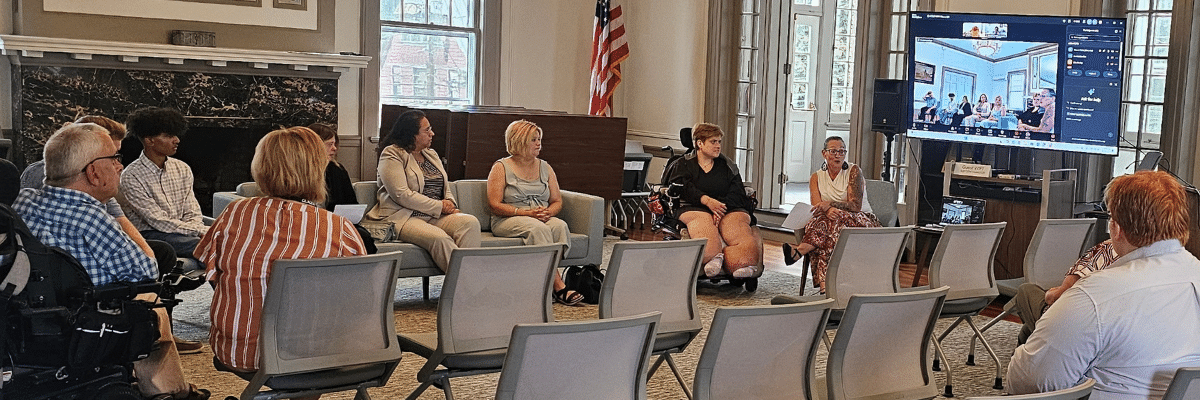
Recently, NEPA Moves, an initiative of the Scranton Area Community Foundation, invited a group of people who regularly rely on public transportation to sit down and talk about what it actually takes to navigate everyday life in Lackawanna and Luzerne counties. Some of the most revealing examples happened before the conversation even started. Our gathering began at 9:00 a.m. One participant traveling from Wilkes-Barre to Scranton caught a bus at 5:55 that morning to be there. Another had to schedule shared-ride transportation the day before. Another arrived nearly an hour early because that was the option that worked with the meeting time. Two others were arranging rides at the last minute.
Getting somewhere when you don’t drive can mean checking schedules, coordinating connections, and building extra hours into your day. It can mean paying for another option when public transportation doesn’t line up with where you need to be. And sometimes, it means asking someone else, a friend, coworker, or family member, every time the bus schedule doesn’t match your own. There’s a financial cost to filling those gaps, but also a personal one, in continually depending on someone else’s availability and generosity.
When Plans Change
For someone who drives, a last-minute change might be inconvenient. For someone who relies on public transportation, it can change the entire equation: a sick child who needs picking up, an employer who asks you to stay late, a doctor’s office with an unexpected opening. Most of us don’t consult a transportation schedule before deciding whether we can go.
The time tax
That difference is part of what we might call the time tax of transportation. It isn’t only the minutes spent on a bus. It begins before the trip, in researching schedules, coordinating connections, and leaving long before someone making the same drive would need to. And when something goes wrong, the tax grows. One participant described a trip to a dental appointment that ultimately involved nearly three hours of travel. By the time it unfolded, the appointment had to be canceled, along with the time set aside for it and the prospect of arranging transportation all over again just to try a second time.
That’s why transportation access can’t be measured only by whether a route exists between Point A and Point B. We also have to ask what it takes for a person to actually use it.
For many of us, transportation gives us the ability to be spontaneous without ever realizing that spontaneity is a privilege. For many of our neighbors, getting somewhere starts long before the trip itself.
The panel conversation also included information from Transit for All PA about Week Without Driving PA, a statewide initiative taking place October 1–8. To learn more and explore how you can participate in WWD PA, visit weekwithoutdrivingpa.org.