
Public Transportation Gives Us More Than a Ride
Independence shouldn’t require a car.
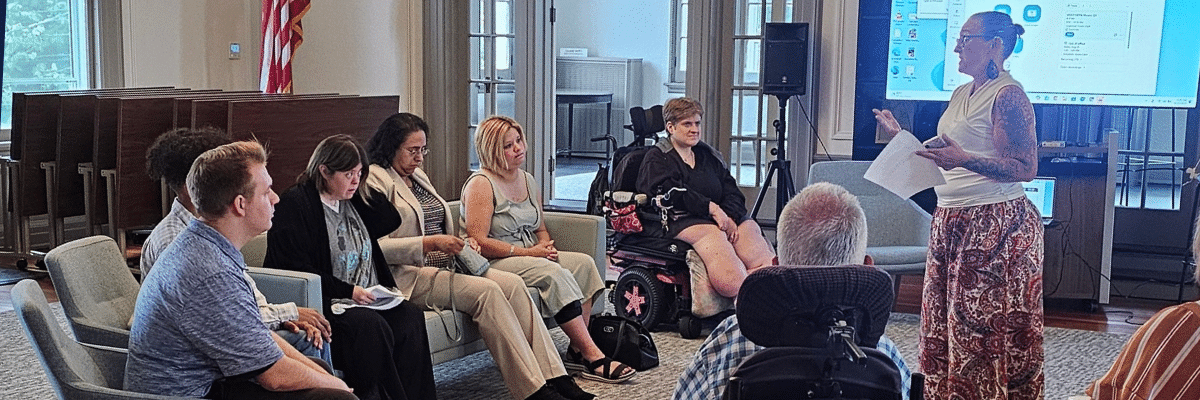
There was a moment during our recent NEPA Moves conversation about transportation when the people who regularly ride public transit started laughing. Not because transportation isn’t serious, but because one participant had pointed out something that, once said aloud, was almost funny in its familiarity: when people who are accustomed to driving suddenly lose access to their car (maybe it’s in the shop) they can feel completely stuck. How am I going to get to work? To the store? Home?
The transit riders laughed because they knew the answer. You figure out another way. You learn the routes, you walk, you make connections. As one participant reminded us, there is a whole world beyond the car.
A resource we don’t always recognize
One participant talked about how people can look at a bus going down the street without really thinking about who is inside. Those are people going to work, shopping, keeping appointments, seeing friends, living their lives. Public transportation is one of the resources making that possible. And yet there can still be a stigma attached to using it, an assumption that someone riding the bus must be poor or have no other choice. Participants pushed back on that. One longtime rider spoke about nearly 40 years of using public transportation. Transit helped her navigate college, and she became someone classmates and professors turned to when they needed to understand the bus system. It allowed her to participate in civic life, including using the bus to reach polling places. When someone later seemed surprised by what she’d been able to accomplish, her response was simple: “This is the life that I deserve.”
That may be one of the most important things we heard all morning. People who don’t drive still deserve full lives, work, community, independence, and they deserve to see public transportation not as something to feel embarrassed about, but as a resource that belongs to them.
Independence can look different
For those of us who drive, independence often looks like a set of car keys. But listen to people who don’t drive, and independence starts to look different: not having to call your daughter every time you need groceries, not having to wait for someone else to be free before you can leave the house. One participant who relies on shared-ride transportation described what happens when that service isn’t available: she is stuck at home. For her, and for older adults in her building, transportation is part of what allows them to get out into the world and stay connected.
Sometimes the bus itself becomes part of that connection. Participants talked warmly about relationships with drivers and conversations with other riders. One described the difference between sitting in a car surrounded by other cars and riding a bus surrounded by people: “We’re people, basically. We get to talk to each other.” Another described meeting people on the bus who needed employment help and being able to connect them with resources. A trip on the bus became a connection to another human being, and potentially to opportunity.
It isn’t only for people without cars
Public transportation doesn’t have to be all or nothing. One participant described a woman with a car sitting in her driveway who chooses public transportation for work because it makes sense for her trip and helps her avoid the expense of parking. That’s what having transportation choices looks like: maybe you drive most days but take the bus somewhere parking is difficult, or your teenager can get around without pulling you away from work. A strong public transportation system isn’t only a safety net for people who don’t own cars. It gives all of us another option, and communities are stronger when people have options.
What it already makes possible
Our participants weren’t pretending the current system is perfect. They know its limitations better than most of us ever will, and they talked about needing later service, Domingo service, more frequent trips, better communication. But they didn’t talk only about what public transportation fails to do. They talked about what it already gives them: work, independence, relationships, confidence, a way to participate and build a life.
That reframes the question we should be asking about investment. It isn’t simply how much public transportation costs. It’s what it makes possible, and what we lose when we don’t invest enough in it. When transportation helps someone keep a job, their employer benefits. When it keeps an older adult connected, families benefit. When it gives more people options, even those of us who keep driving benefit from less competition for road and parking space.
“This is the life that I deserve.” Maybe that is where this conversation should leave us. Mobility is freedom: the freedom to work, to take care of yourself, to see other people, to make choices about your own life. People without cars should not feel they are asking for something extra when they ask for transportation that allows them to do those things. They are asking to participate in the same community as everyone else, and public transportation is one of the tools that makes that possible.
The panel conversation also included information from Transit for All PA about Week Without Driving PA, a statewide initiative taking place Octubre 1–8. To learn more and explore how you can participate in WWD PA, visit weekwithoutdrivingpa.org.